25-08-2026
25th August 2026 - Scalfolding?
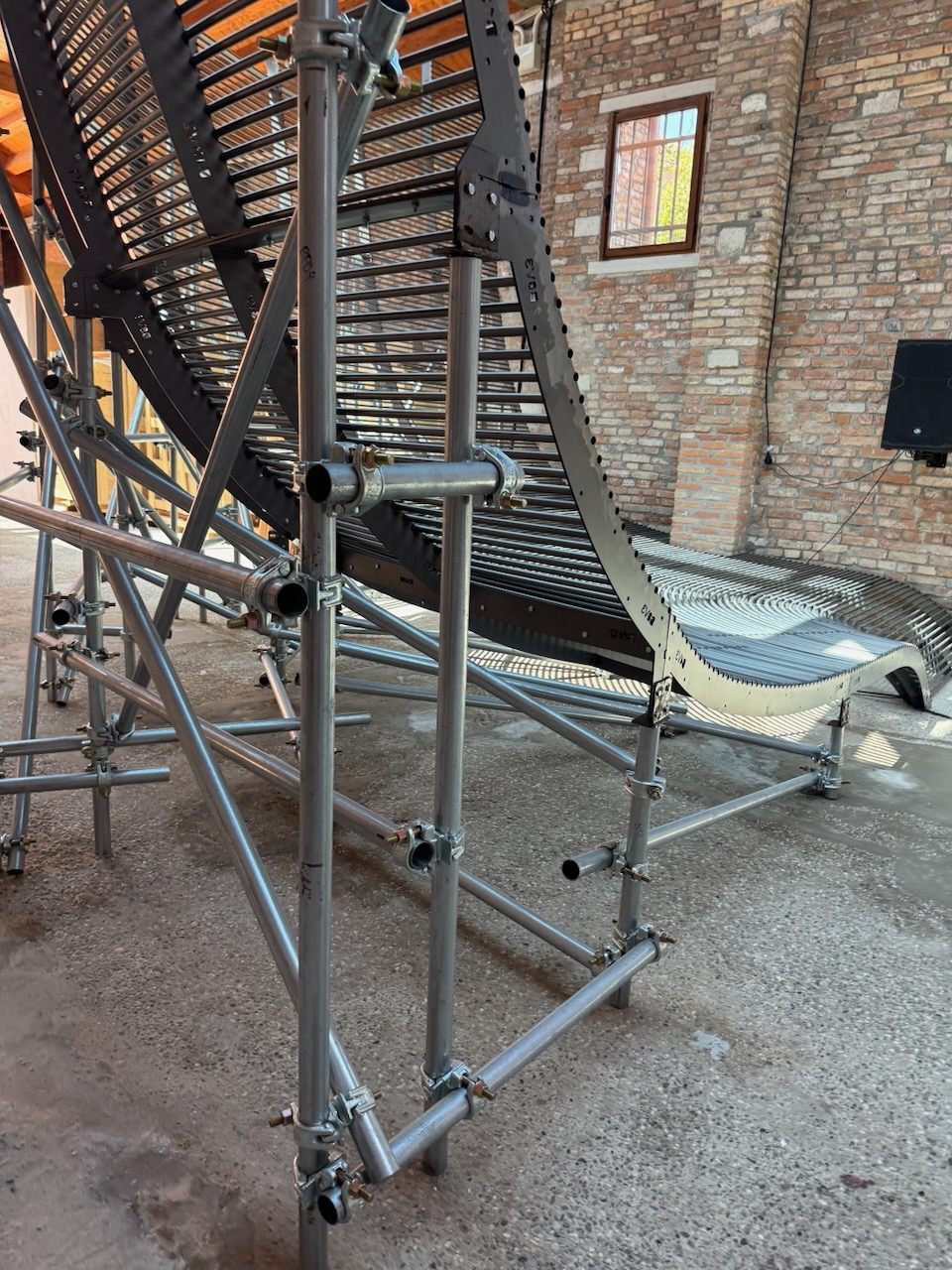
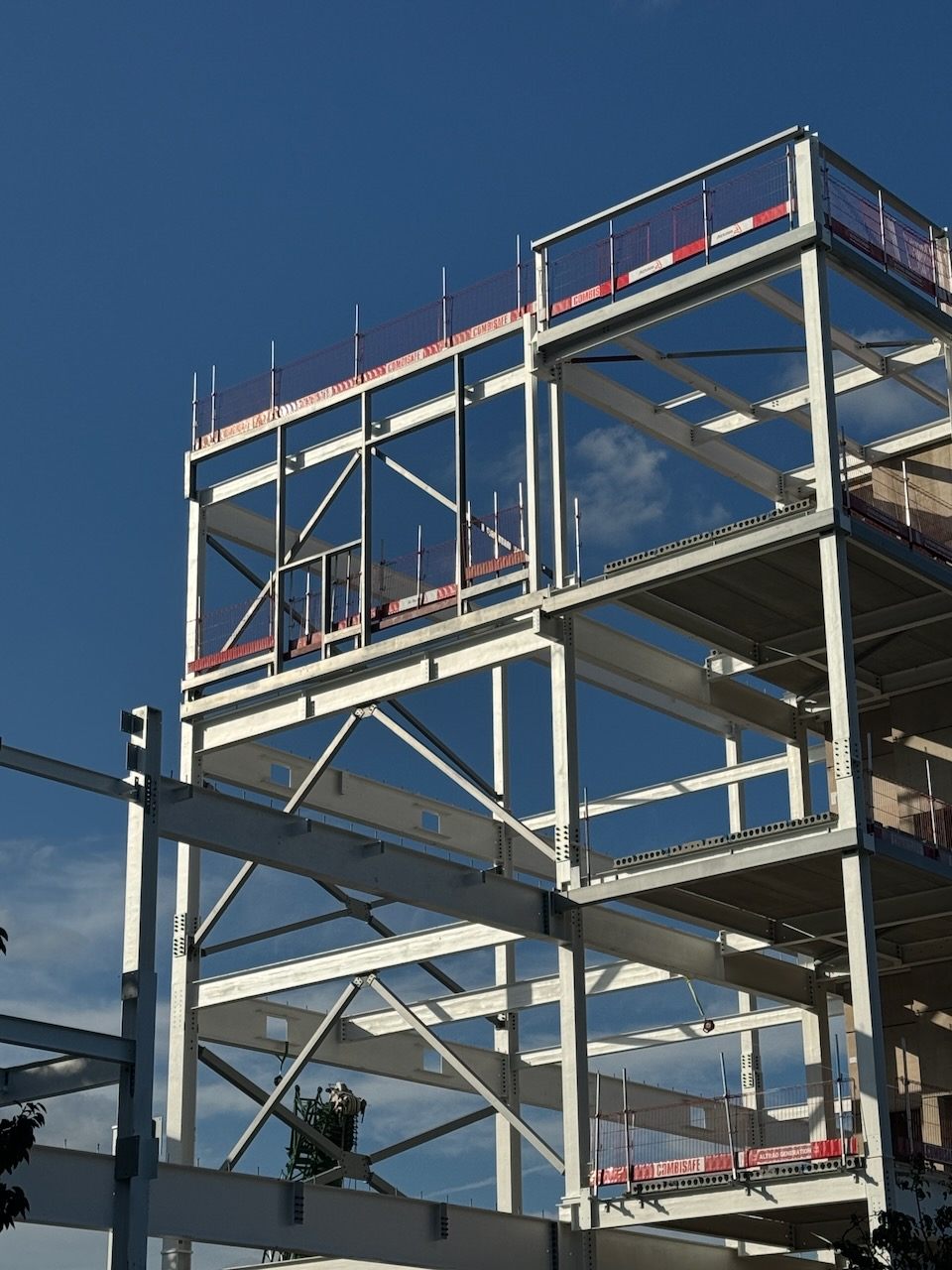
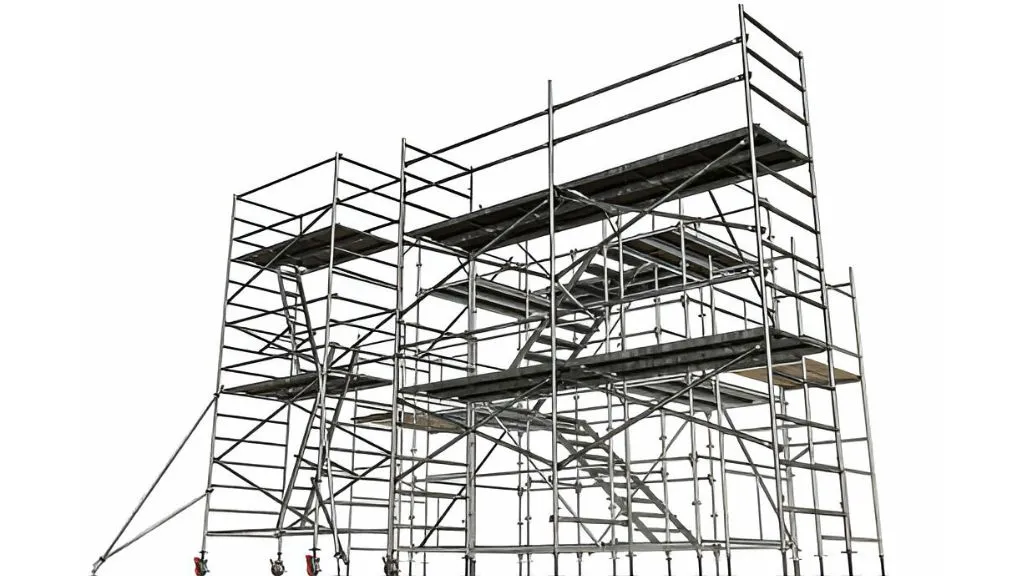
how scaffolding frames an environment. It promises change.
temporary home
25-08-2026
how scaffolding frames an environment. It promises change.
temporary home
05-09-2025
Thank you! x
02-05-2025
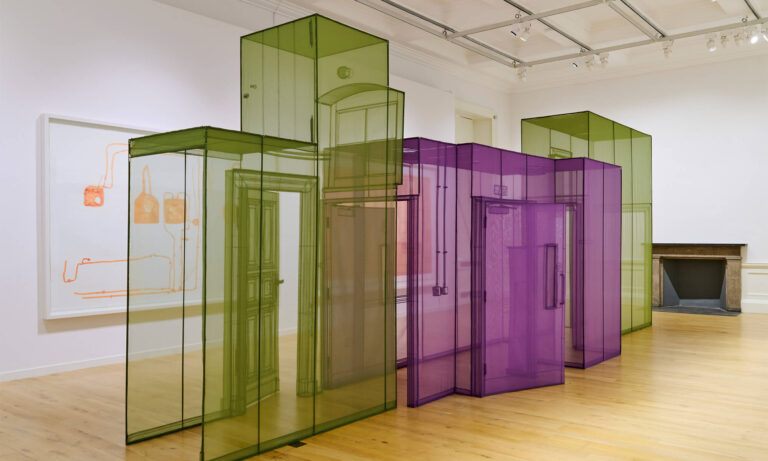
| (Hypebeast 2025) |
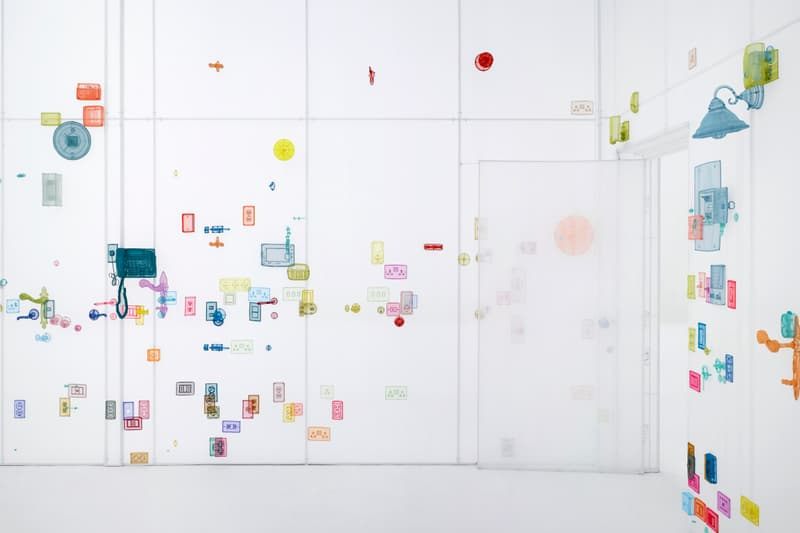
Looking at Walk the House at Tate Modern (Suh 2025), I was immediately moved by the strange familiarity of the spaces Do Ho Suh stitched together. The corridors and staircases constructed in translucent fabric do not function as replicas of his past homes. They are spaces made of memory, stitched not only from thread but from accumulated, ghost-like impressions of inhabitation. “Memory is not just about recollection,” Suh says in the Tate Etc. interview, “but about the passage through.” That passage, through doorways, into thresholds, across boundaries, becomes the artwork itself.
In my project, I’ve been thinking of home not as a fixed location but as a structure built through movement and conversation. Suh's rooms echo this fluidity. They resist finality. The viewer does not simply observe the work, but instead enters it, dwells in it temporarily, and exits changed. In Suh’s words: “These spaces are like a garment you can wear… they move with you.”
The transparency of Suh’s installation also resonates with how I use digital textures and objects as fragments of spaces that no longer entirely exist. The homes are visible yet insubstantial, much like memories carried in migration. Suh does not try to reconstruct his past, but instead builds a “transportable memory,” as one of the exhibition texts puts it. That phrase has stayed with me. It captures the friction I feel in trying to reconstruct others’ narratives of home, not to preserve them, but to let them be carried, worn, and reshaped within the digital terrain of the digital space.
What struck me most was how Suh treats home as an ongoing negotiation. His works are not static memorials but spaces of breath and transformation. I see my installation in a similar way, not as a static archive, but as a shared, living conversation shaped by each participant’s presence. Suh offers a structure for how we might build memory, not by fixing it but by allowing it to shift. His work affirms that memory is not housed. It moves. It expands. It dwells.
16-04-2025
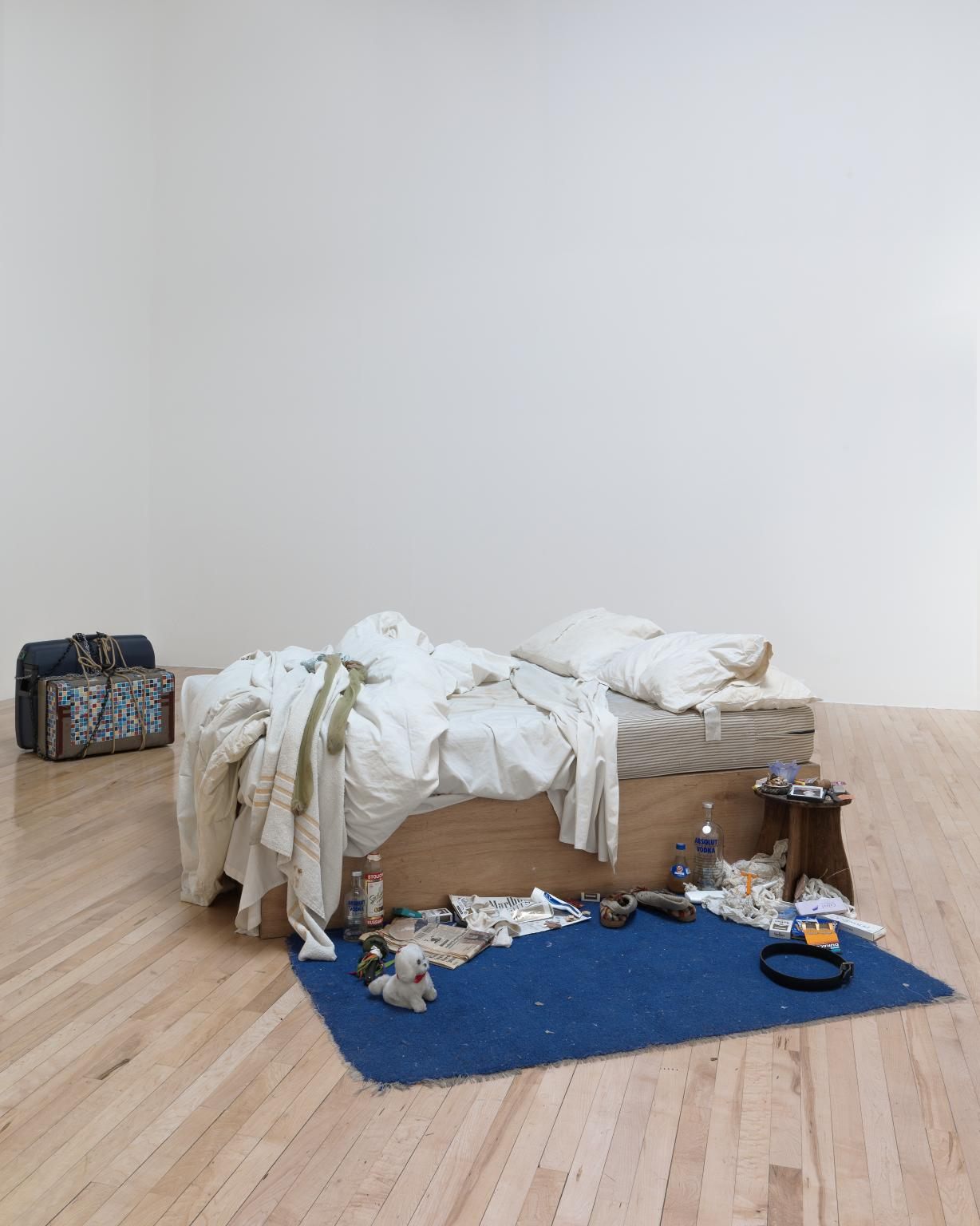
When I first encountered the Turner Prize Work My Bed (Emin 1998), I was still wondering whether vulnerability could be effectively embedded into an installation without resorting to theatrics. Emin's work is raw but not performative. It is a static site of collapse, care, and chaos. In her installation, the unmade bed becomes a diary. It isn’t just a sculpture of sleep, but a freeze-frame of aftermath. I return to this work now, in the context of my own bunk bed piece, and the connection feels more than symbolic. I’m interested in the bed as a transitional site, one where bodies rest but also confront memory.
Emin's work makes no effort to aestheticise the discomfort. In my own practice, I’ve tried to preserve that honest impulse. The softness of a bed together with the personal, intimate stories of conversations offer a pause. They allow space for talk that might not unfold in a gallery context. Her infamous, controversial work of My Bed, helped me consider the politics of intimacy. It challenged me to consider what is visible and what remains unspoken, especially when the topic of home is discussed.
Where Emin’s work crystallised a private moment into a public one, I intended to allow for a shared moment to emerge in real time. Her work gave me a structure for thinking about presence, which is not a spectacle, but something to be felt, held quietly, and then let go.
15-04-2025
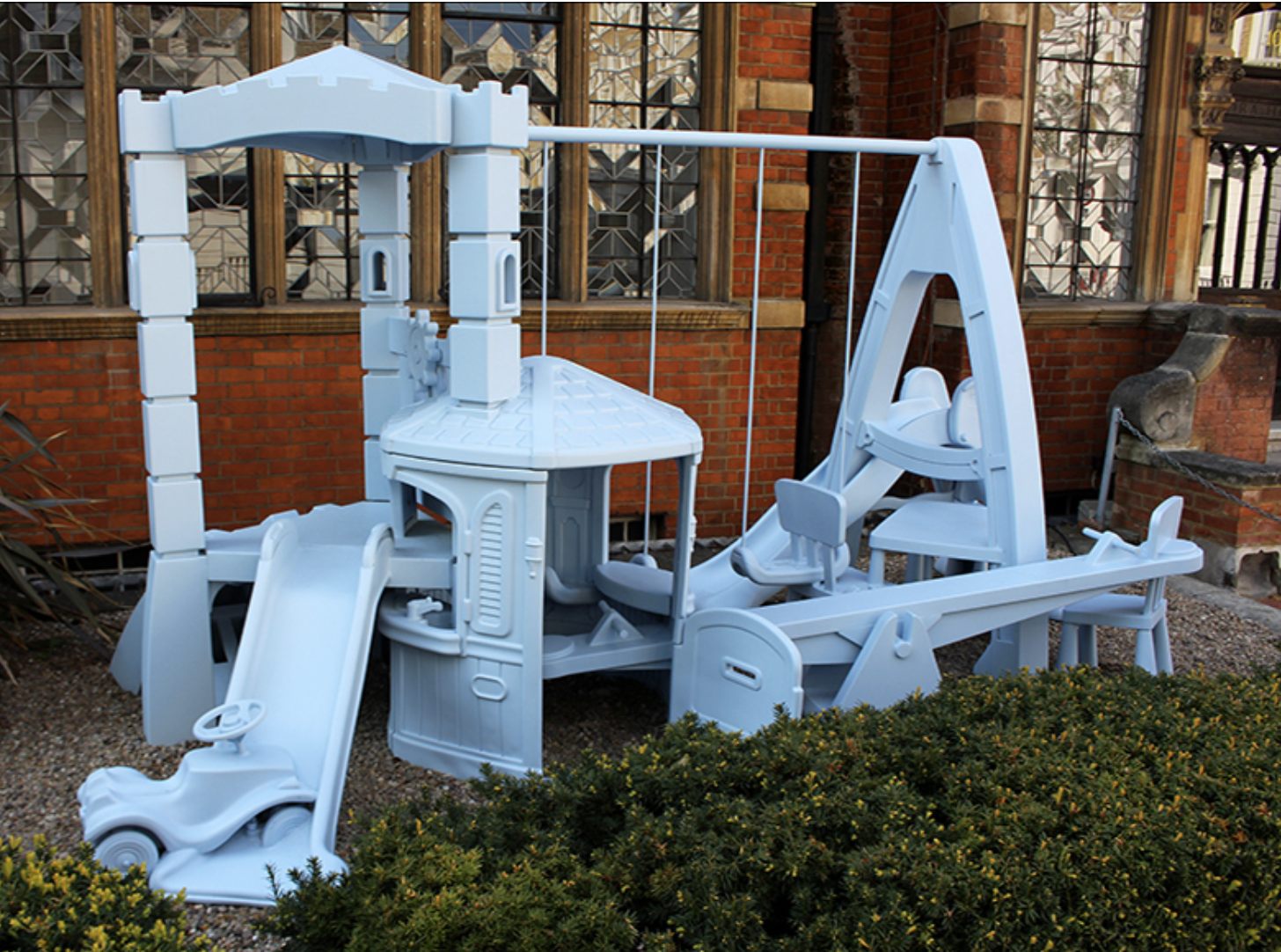
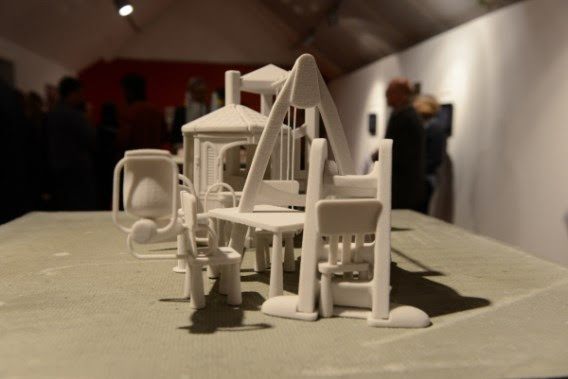
Rupert Norfolk's Playground is a sculptural piece that began as a proposal of a digital study of familiar playground equipment in his Maquette for Playground. He took forms like seesaws and swings, then digitally reconfigured them into unfamiliar, abstracted structures. What began as the geometry of play became something speculative and inert. I find his approach striking because these sculptures retain their sense of kinetic memory, even though they can no longer be used. The work invites you to remember what it once was, and imagine what it could do, but denies any real interaction. It sits in that uncanny space between function and fiction.
His's maquette for Playground came across while I was researching digital-physical translations and looking deeper in his later, finalised project. The idea of digitally distorting a memory-object before materialising it in steel feels closely related to how I shape the digital fragments in Home is a dwelling path. Whether it’s a 3D scan of a room or a ceramic form built from a memory, my work also leans on the viewer to animate something otherwise inert. His proposal for a public forecourt helped me think through the importance of site, and how the same object can be experienced differently based on its context. Norfolk offers a sculptural logic that is not static, but speculative, which is what I try to embody in my own installations.
06-04-2025
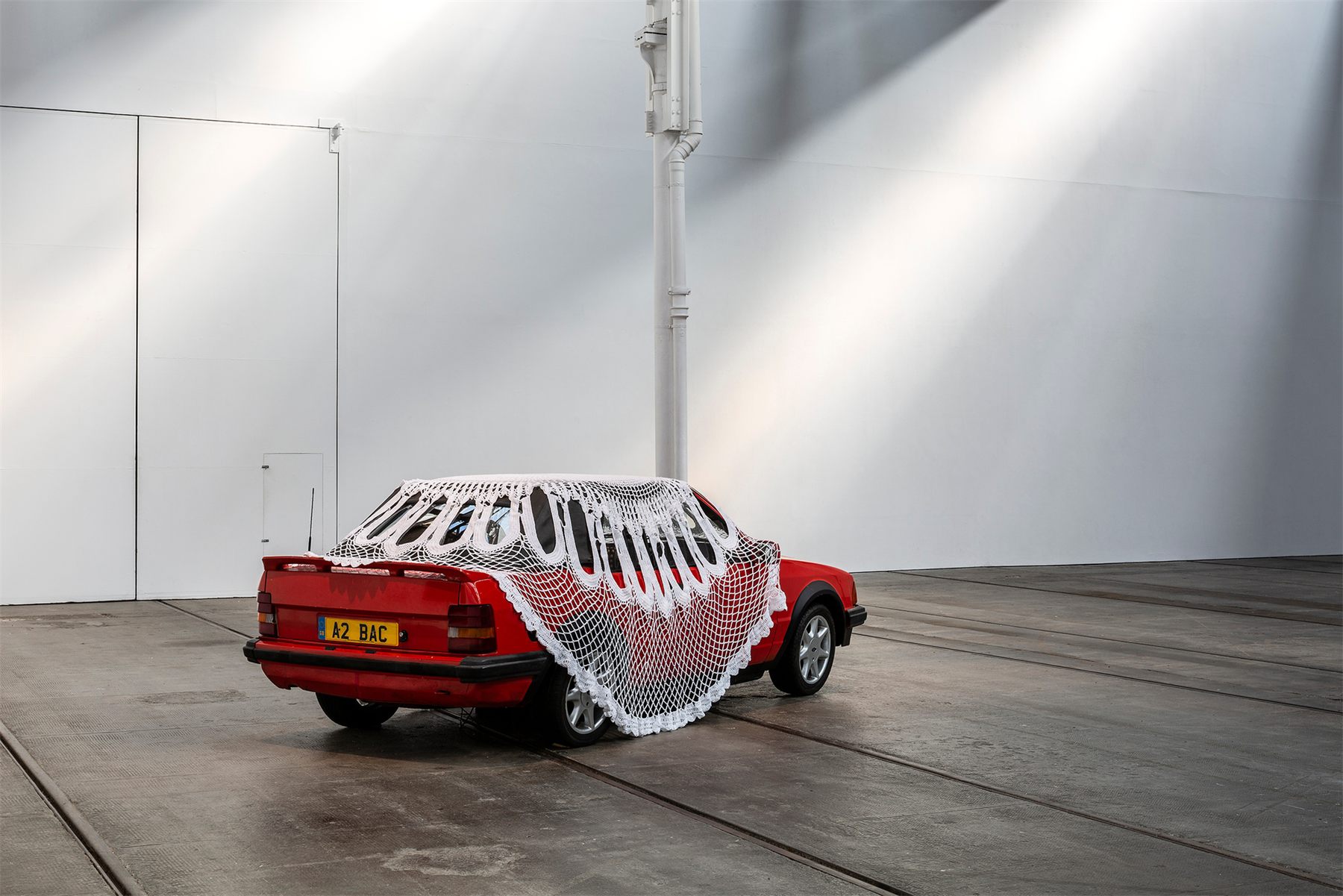
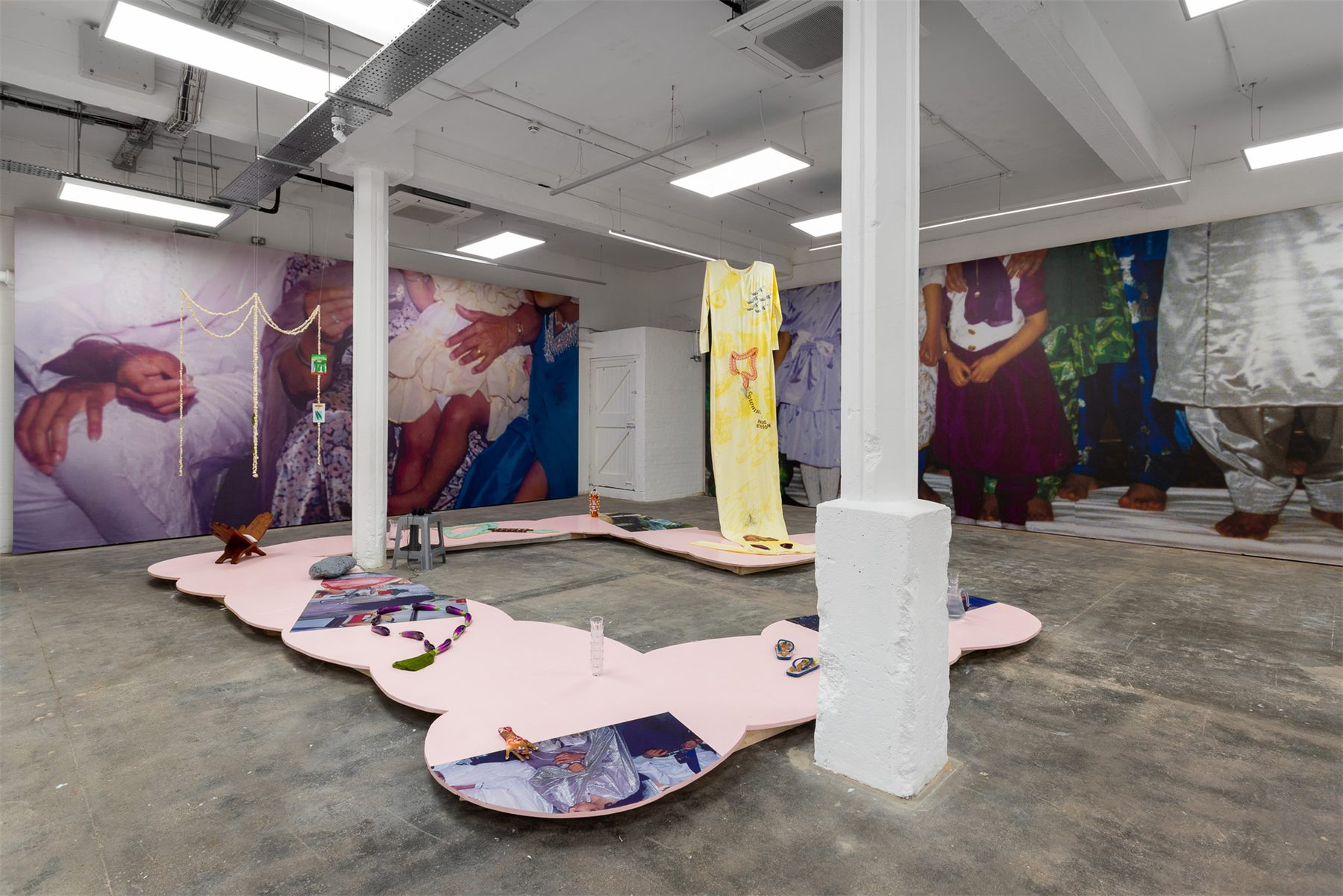
Jasleen Kaur’s sculptural installations weave together cultural memory, family heritage, and collective belonging through the use of reclaimed everyday objects. In Alter Altar, the entire exhibition set up reminds me of those objects at home that don’t quite fit, yet never leave. The car becomes a container of ancestral memory, wrapped in softness, ritual, and absurdity. That softness unsettles.
What draws me to Kaur’s work is her attention to the domestic and the diasporic, not as separate threads but as entangled knots. Her Sikh-Scottish upbringing is reflected in her materials: Irn-Bru resin, salvaged objects, song, and everyday rituals. They don’t explain themselves. They sit with you like a relative at the dinner table, familiar but not always understood, and the artists asks simply acknolegement and acceptance in that.
Kaur’s ability to weave personal artefacts into cultural reflection reminded me that material memory does not require grand gestures. It only asks to be held, or sometimes, simply placed.
Her work pushes me to think about how to let the objects in my own work hold more of that tension: between the personal and the communal, between absurdity and devotion. Her process of collecting, remaking, and letting things sit together in contradiction is a method I like to return to and focus on.
29-03-2025
Some transcripts and findings in talking to friends:
20-03-2025
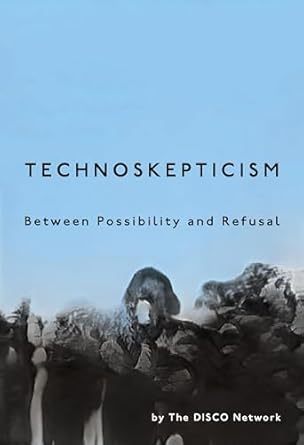
There is a quiet ache in the way we remember spaces we never truly had. Reading “The Longing for Home” chapter of Technoskepticism: Between Possibility and Refusal feels like someone took the gut feeling I had while building my New Art City world and gave it context, breath and history. The chapter argues that digital nostalgia is often a longing not just for what was, but for what never really belonged to us. It draws from platforms that gathered communities such as Myspace, AsianAvenue and BlackPlanet, framing them not simply as tools but as emotional homeplaces that held special meaning for marginalised users. I think about the bunk bed in my installation, a stand-in for a home I can no longer define clearly. The text helps me understand that longing is a political, not merely sentimental, phenomenon.
It also reminds me why I keep recording small, easily overlooked stories: the smell of wet asphalt, the silly memories of after-school activities, mundane cooking and being with parents. These fragments belong to people whose voices are not usually archived in formal histories. By folding them into the web space, I’m trying to give shelter to memories that rarely find a stage.
Digital spaces once taught us to build homes through code, layouts and 3-D customisation. Myspace wasn’t just a profile: it was a bedroom wall in HTML, a diary we stitched together. Most current platforms want our engagement and data, not our stories. My act of draping Polycam scans over furniture carries that same tension, carving out safety and memory where the mainstream internet no longer welcomes building. This chapter convinces me to keep treating the installation as an engine for re-imagining home, rather than a museum for preserving it.
11-03-2025
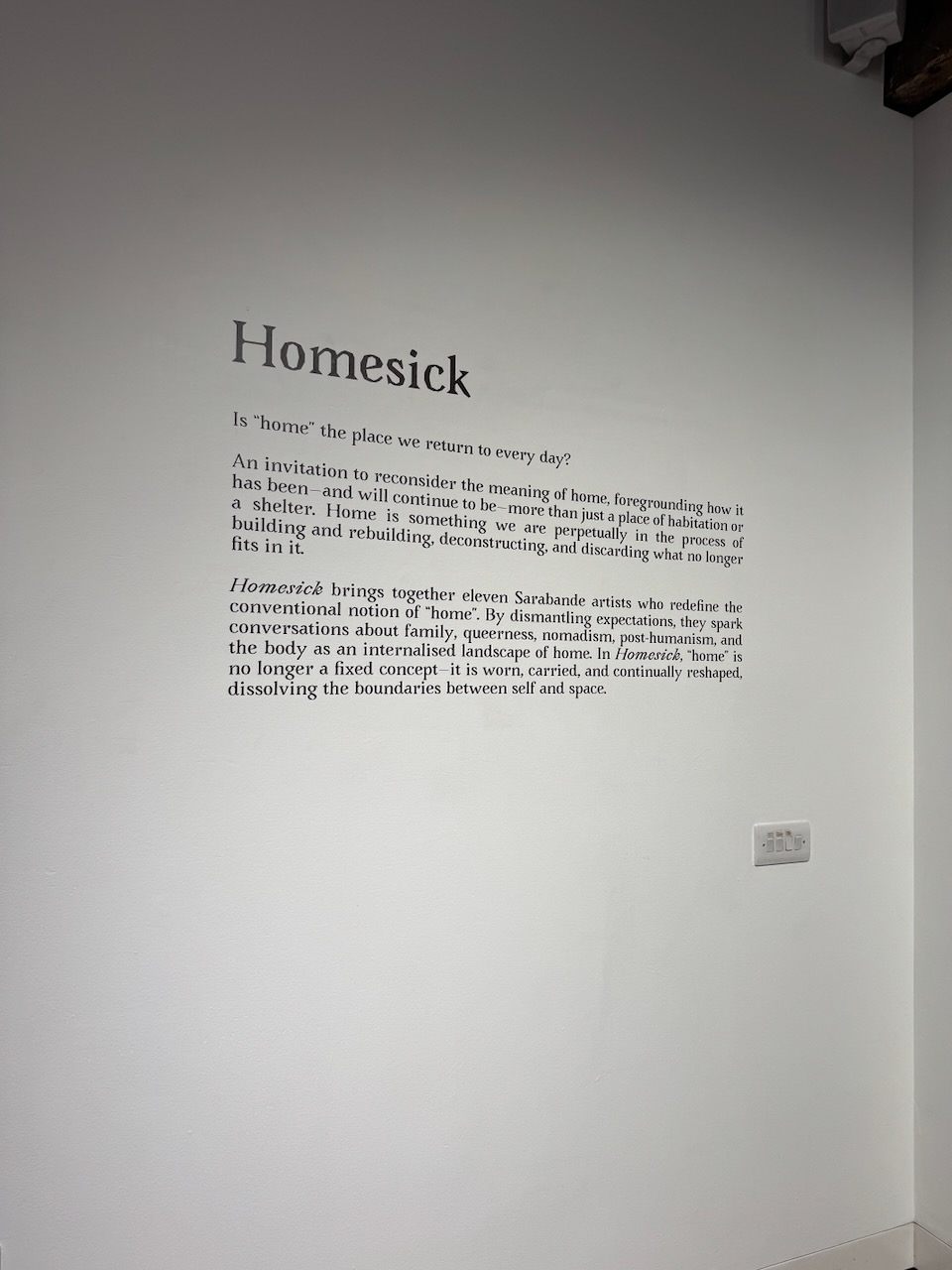
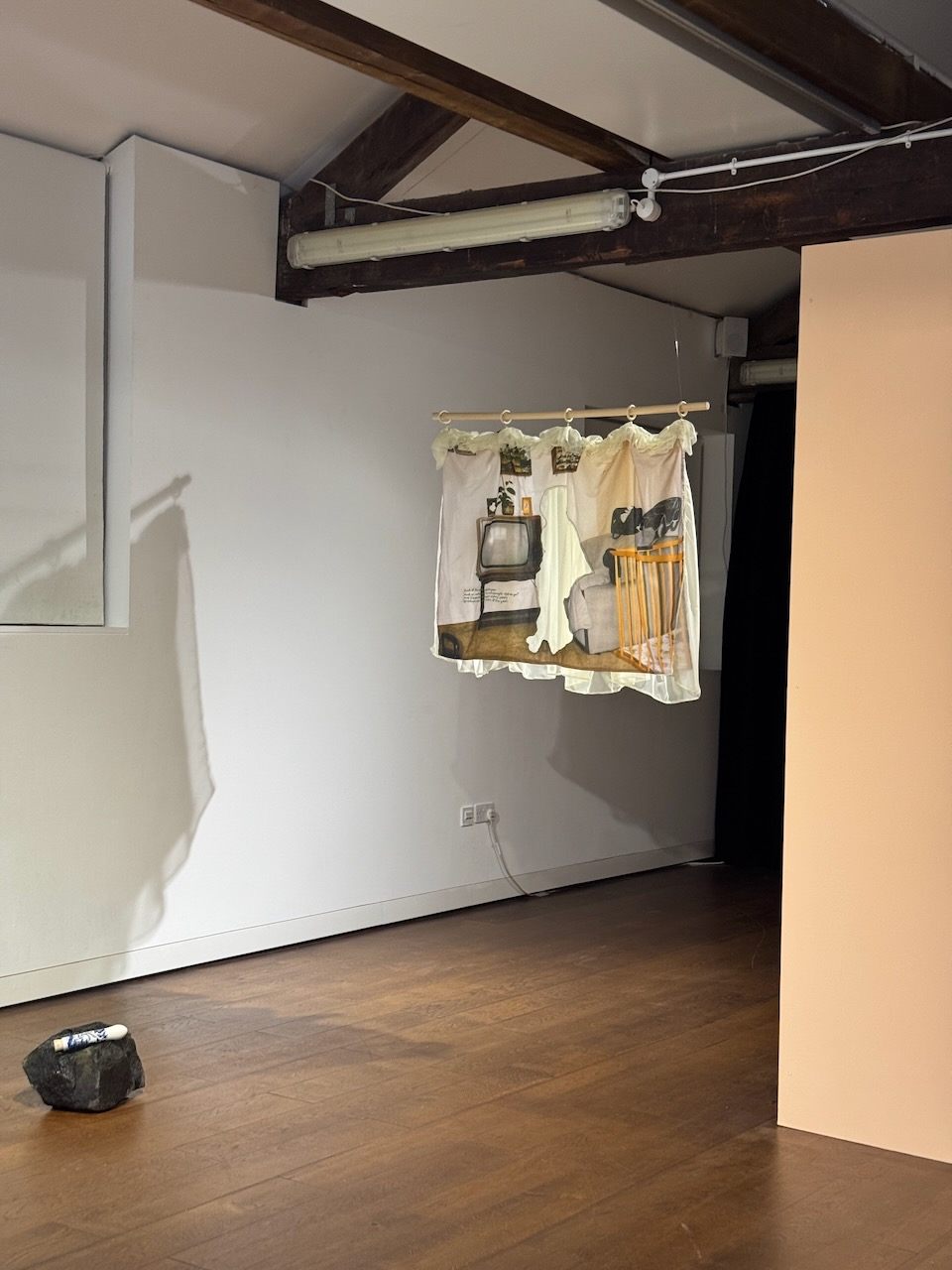
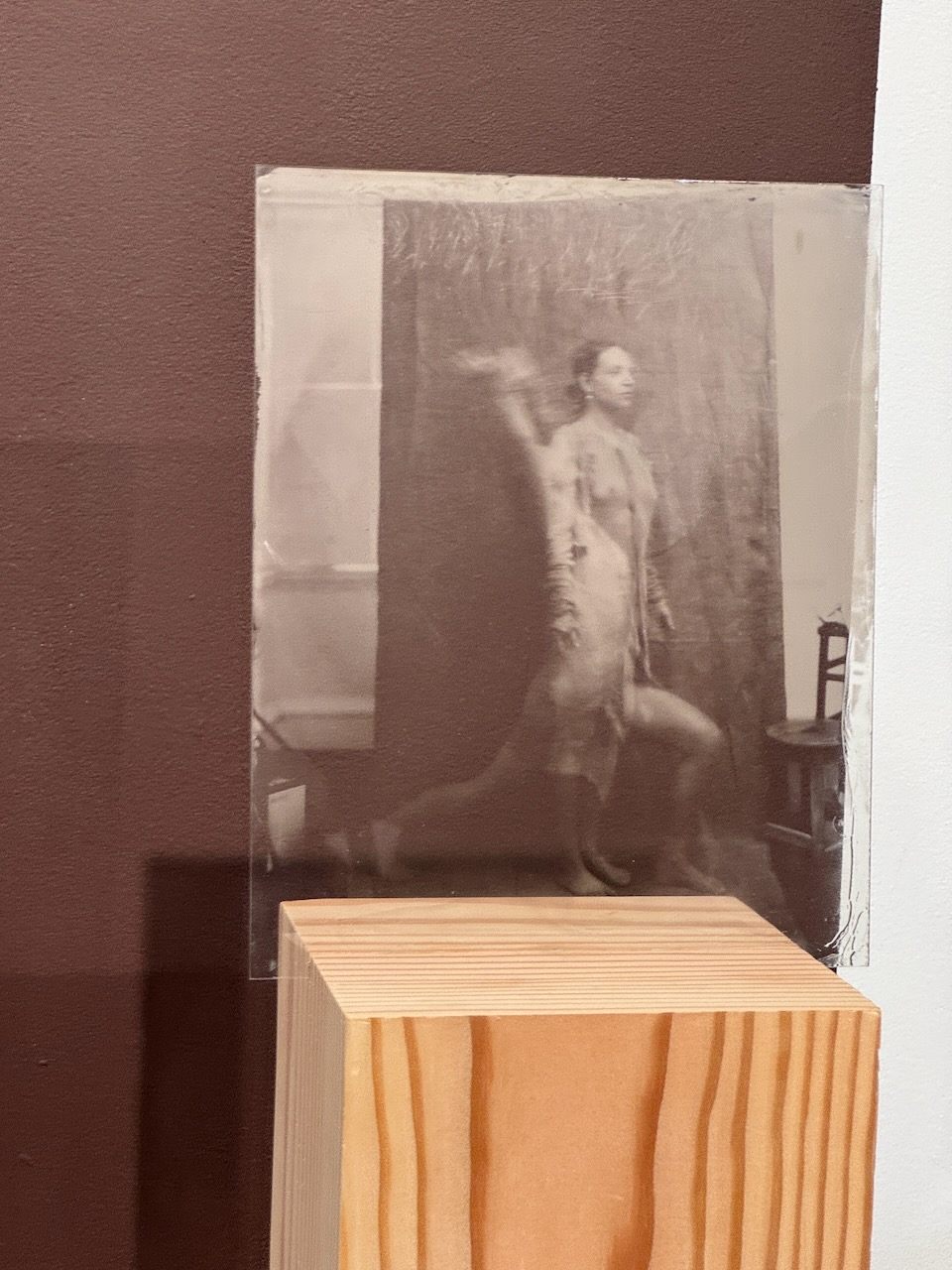
A busy envening on 11 March, I also attended a panel discussion between artists and curator of the exhibition Homesick at Sarabande Foundation. The show gathered works by eleven women-identifying artists who explore shifting experiences of home, displacement and identity (Sarabande Foundation 2025). The curators describe home as something worn and carried rather than fixed, a sentiment that resonates deeply with Home is a dwelling path. Homesick dismantles what no longer fits in the home and offers a structural reassurance that home is not a single site, but a set of relations in motion. Queerness, nomadism, and posthuman perspectives were not exceptions in the show, but guiding forces. The exhibition helped me name the intuitive feeling I’ve been shaping, that home is unstable, negotiated, and co-authored.
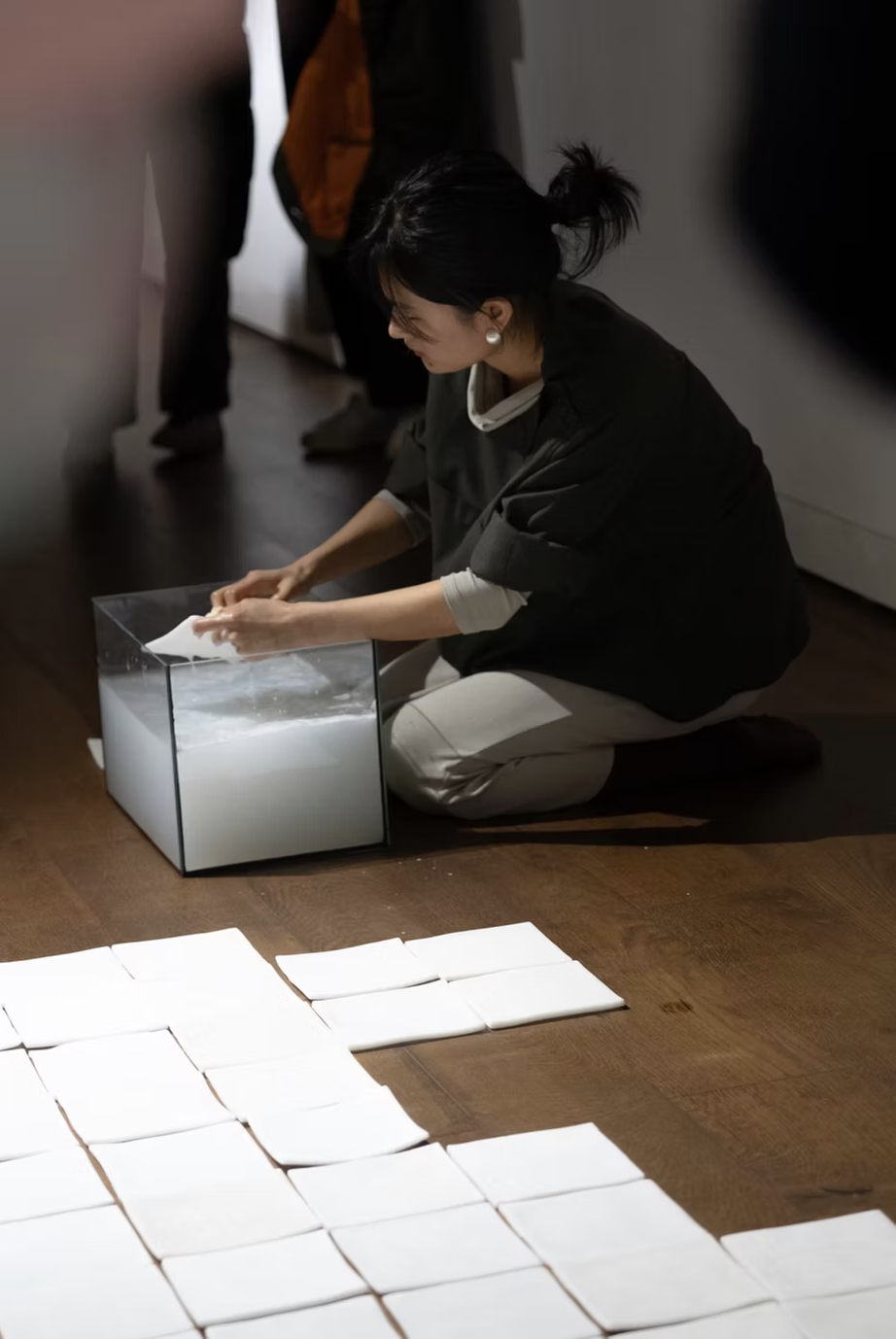
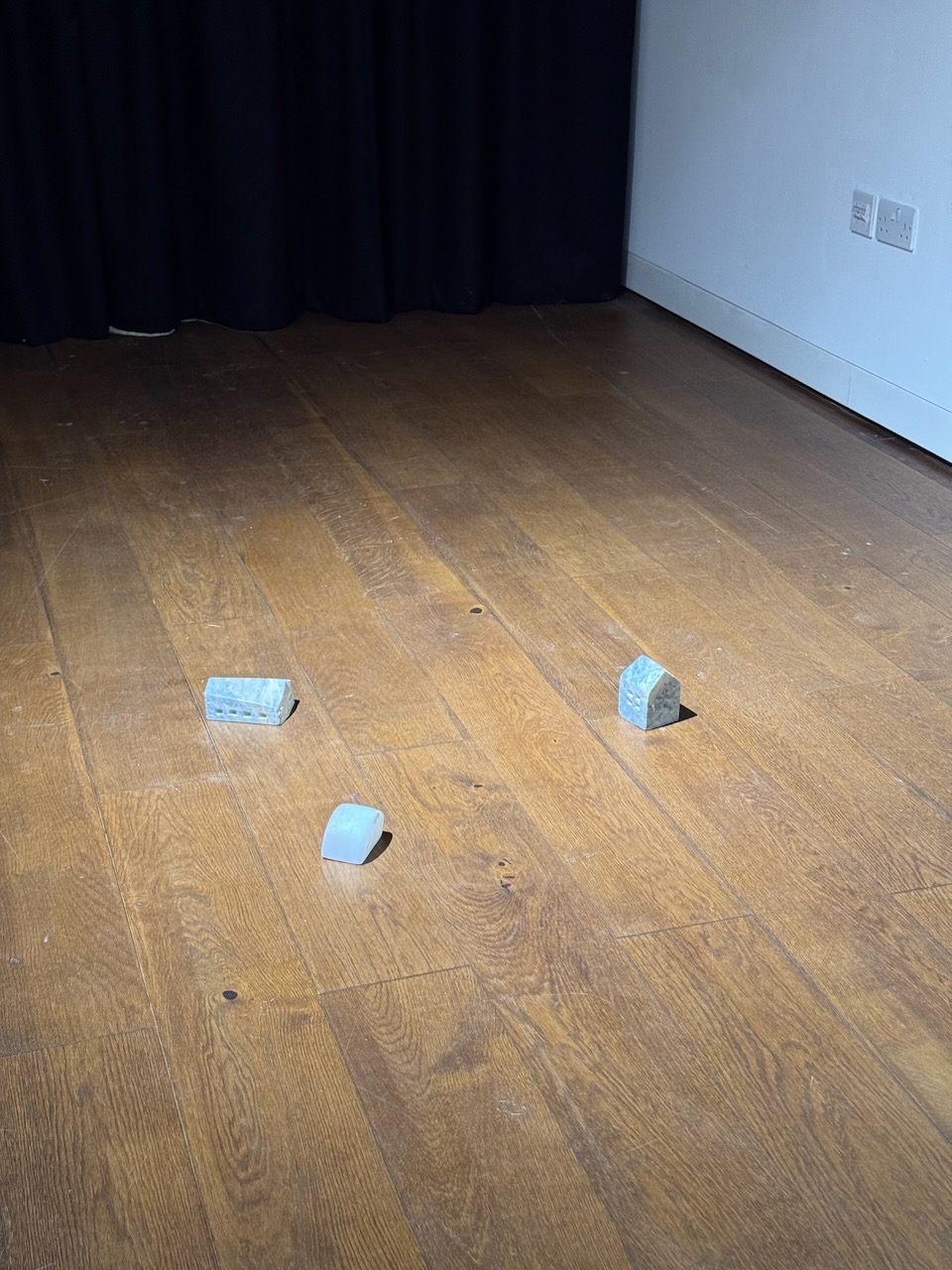
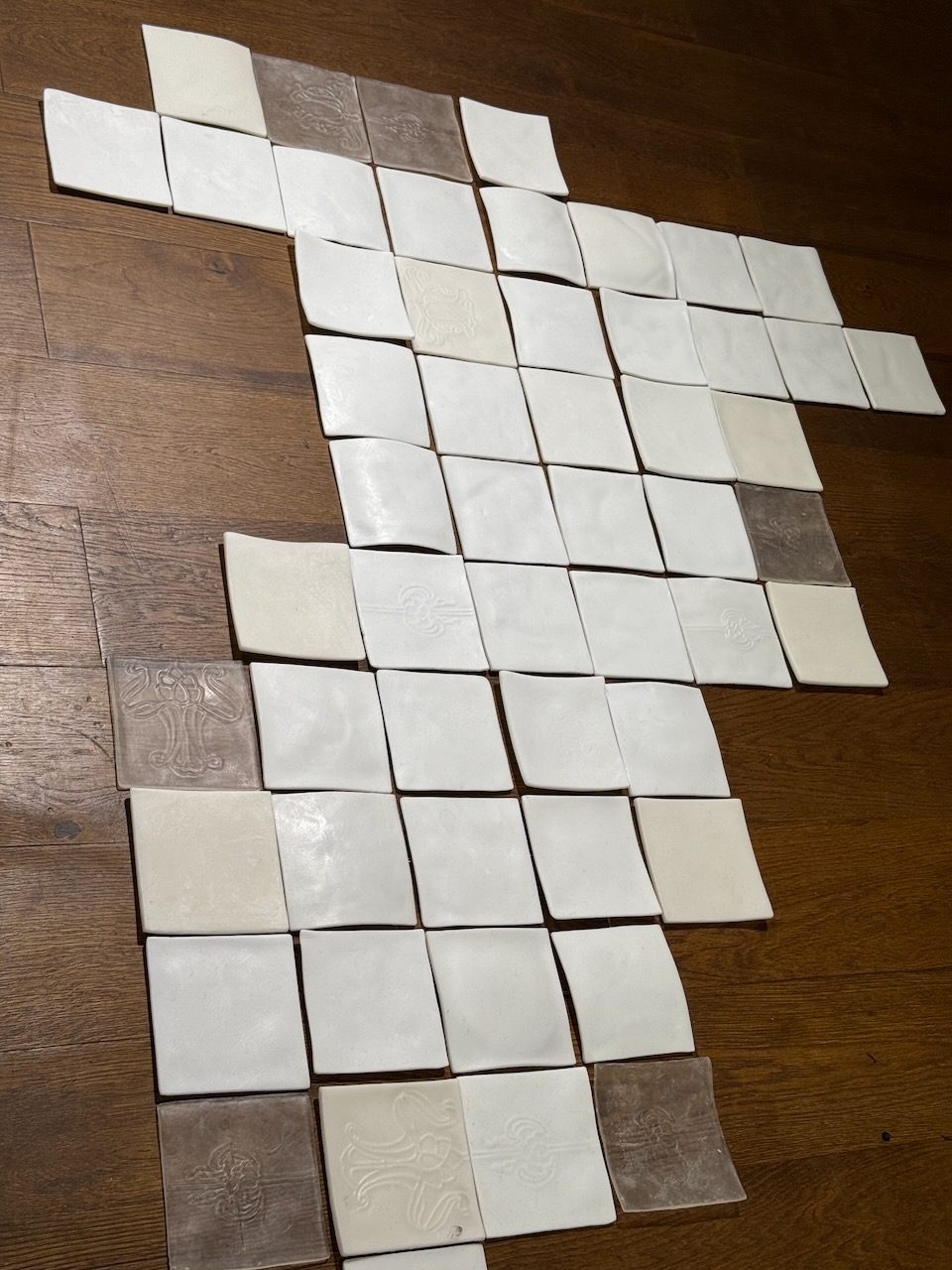
Yijia Wu’s work stood out, not only for its visual composition but for the absurdity it embraced. In the panel, she spoke of objects as migration, and her Soap Tiles series (Wu 2023), consisting of white, translucent soaps, is arranged across a tiled grid and then ritually washed in a clear water tank. The act is absurdly simple: scrubbing homes until they vanish. Yet it lingers. The performance is not dramatic. It’s quiet. Repetitive. Intimate. What remains after rinsing is a residue that holds both presence and disappearance. It’s not nostalgia she offers through the process of shifting her artwork, but friction, which is a kind of tension between presence and detachment. I think about her question: Is grounding important, or just a myth we chase?
Wu described memory as what we forget, and her performances make that contradiction tactile. The soap tiles are literal objects of home, but they’re also metaphors for how domestic memory dissolves under time and migration. It’s not permanence but ritual that matters.
11-03-2025
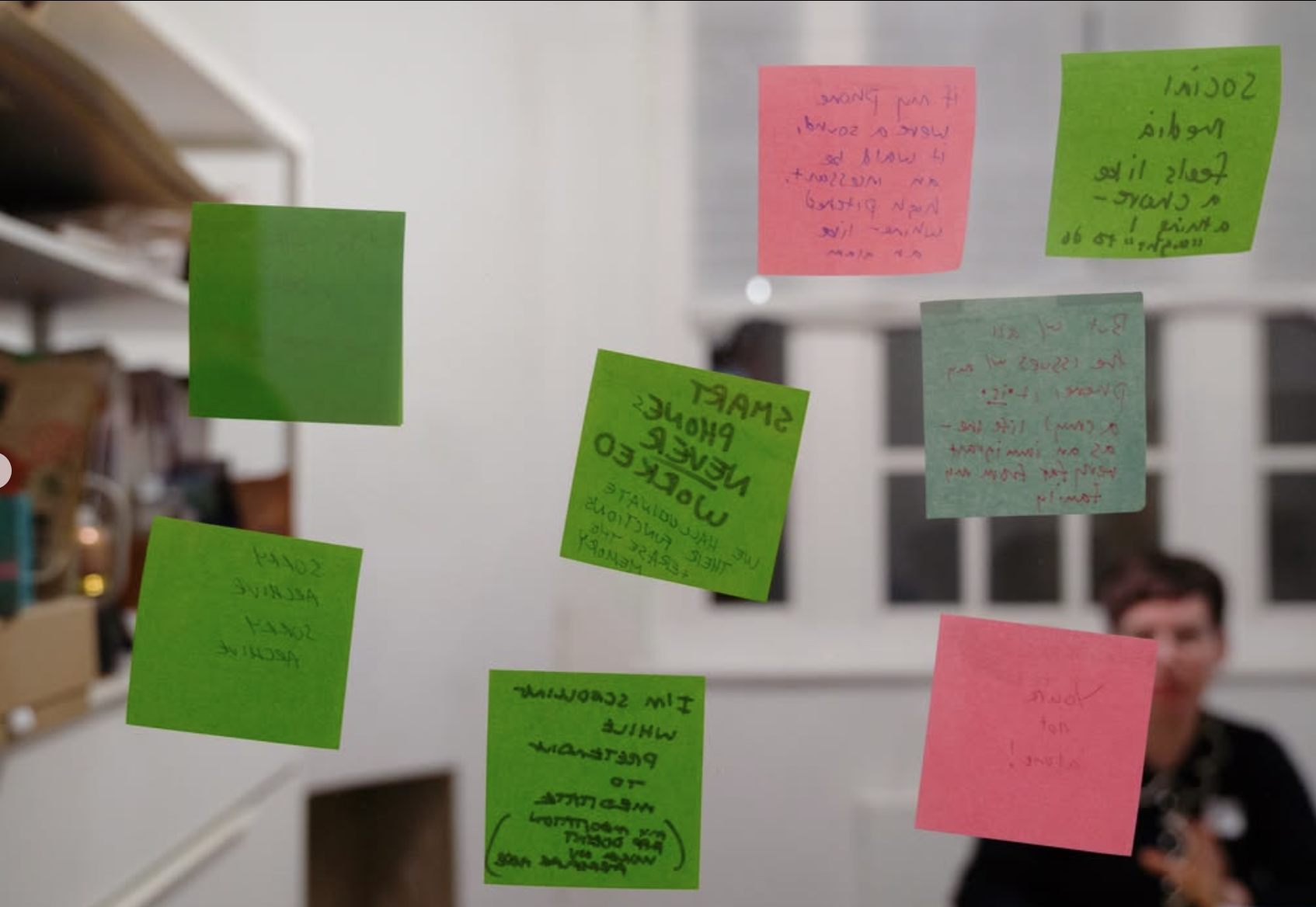
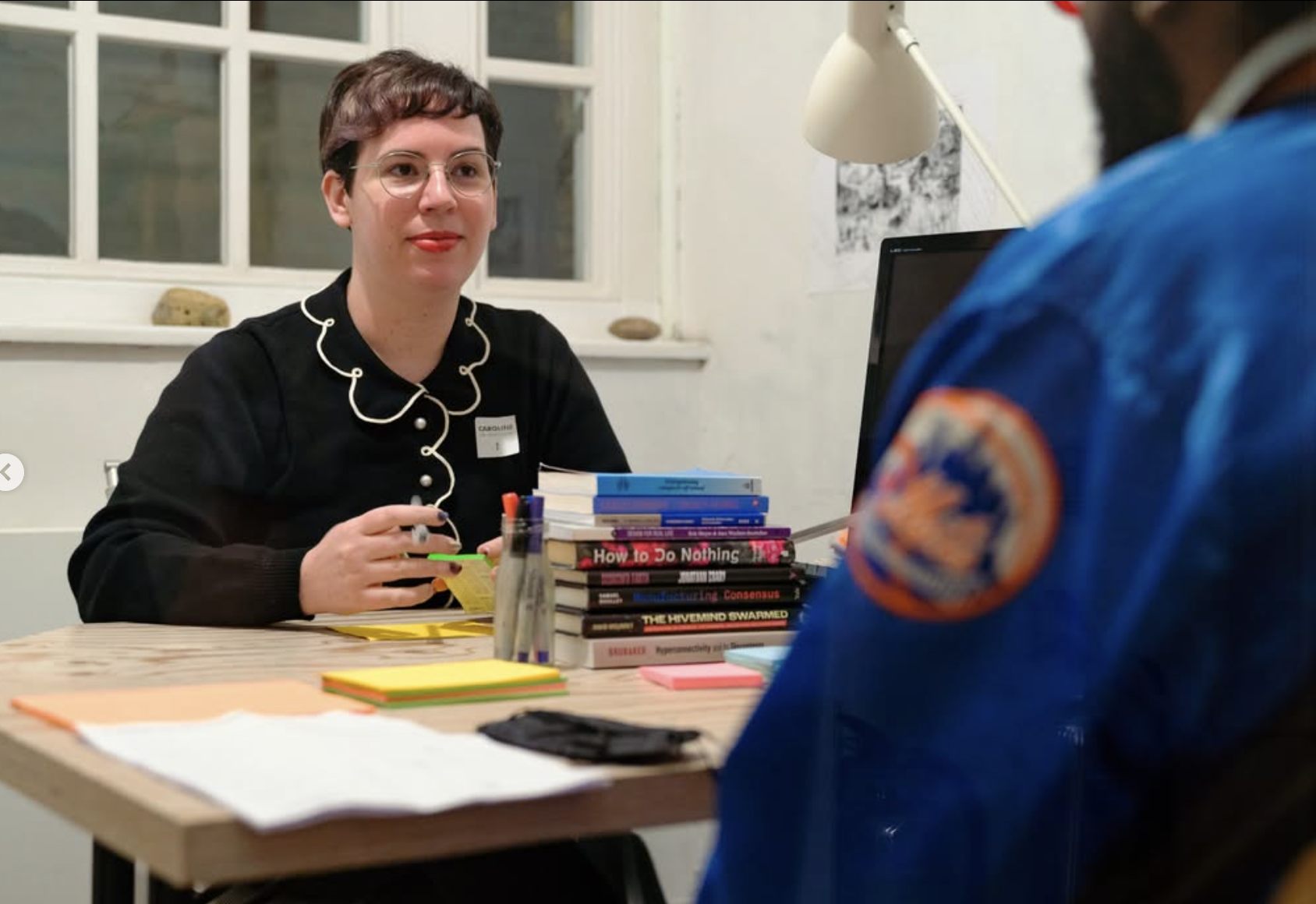
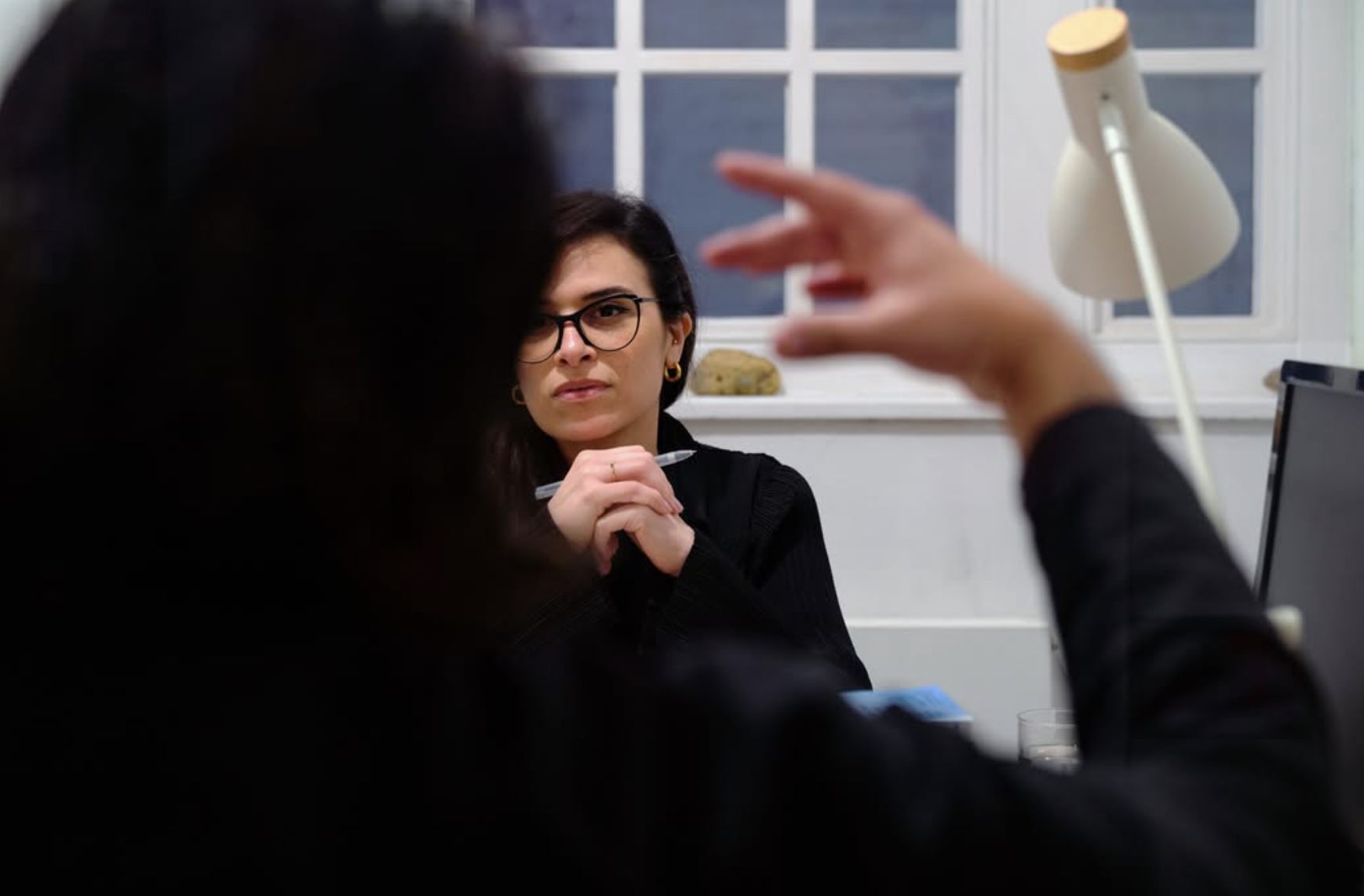
Reading and experiencing the work of Caroline Sinders and Romy Gad el Rab Body-Phone-Complex in Delfina’s Foundation’s event - A Night of Encounters reframed how I think about intimacy in digital and performance art. Their 1:1 sessions, which are quiet interventions where visitors reflect on the emotional entanglement with their phones, reminded me that intimate conversation can be both art and method. What they stage is not a spectacle, but an invitation.
As I shape Pillow Talk, the performative layer of Home is a dwelling path, I reflect on this performance Body-Phone-Complex. It’s not just about the digital space people explore below, but also what follows that moment of quiet reflection, when I ask them to bring a pillow and come up to the upper bunk and talk. Like Caroline and Romy, I do not promise therapy or a solution. But I offer space and moment of reflection.
Their phrasing, 'Does your phone feel like part of you?' influenced the kind of questions I wanted to ask. Not interrogative, but tender. Open-ended. With room for silence. Our objects shape us: phones, beds, screens. In my work, it's the domestic furniture, scent, or taste that holds memory, and it’s through this staged closeness that participants might begin to share their own “fragments of home.”
This performance piece solidified my belief in the small-scale, intimate performance, specifically the soft, durational gesture. It reminded me that care, vulnerability, and shared presence can be as powerful as any polished output. Even if no words are spoken, being in the same breath for 15 minutes is enough.
28-02-2025
(Dickinson 1896)
Today, I return to Emily Dickinson’s poem “I years had been from home”, and in it, I fixated on what it means to revisit a space once called home, only to be met by the unfamiliar. Her use of the word dwelling is what stayed with me. Not as a noun alone, but as an action, a lingering. A haunting. A persistence.
This marks the coming of my New Art City title: Home is a dwelling path. In choosing dwelling for the title, I’m pointing to the acts of staying, remembering, and confronting. The uncanny moment when a former comfort feels estranged. Dickinson’s poem offers not a resolution, but a response, a fleeing, a gasp. This gesture of approach and retreat mirrors the interaction in my digital game, where participants sit or lie down to speak of home, then leave, and their words are absorbed into the digital space. This poem helped me name that movement. Not just being home, but dwelling there, even when it hurts.
21-02-2025
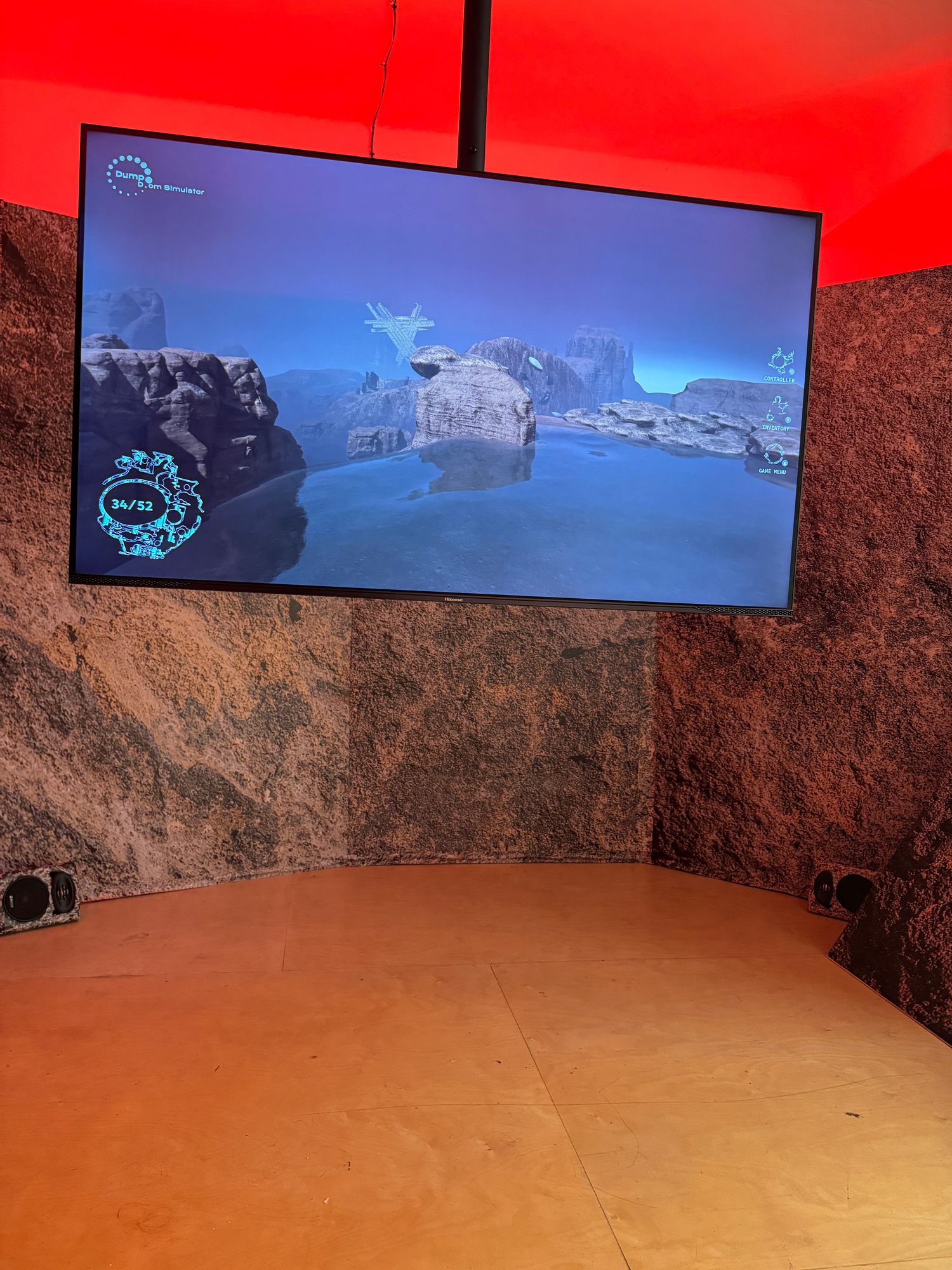
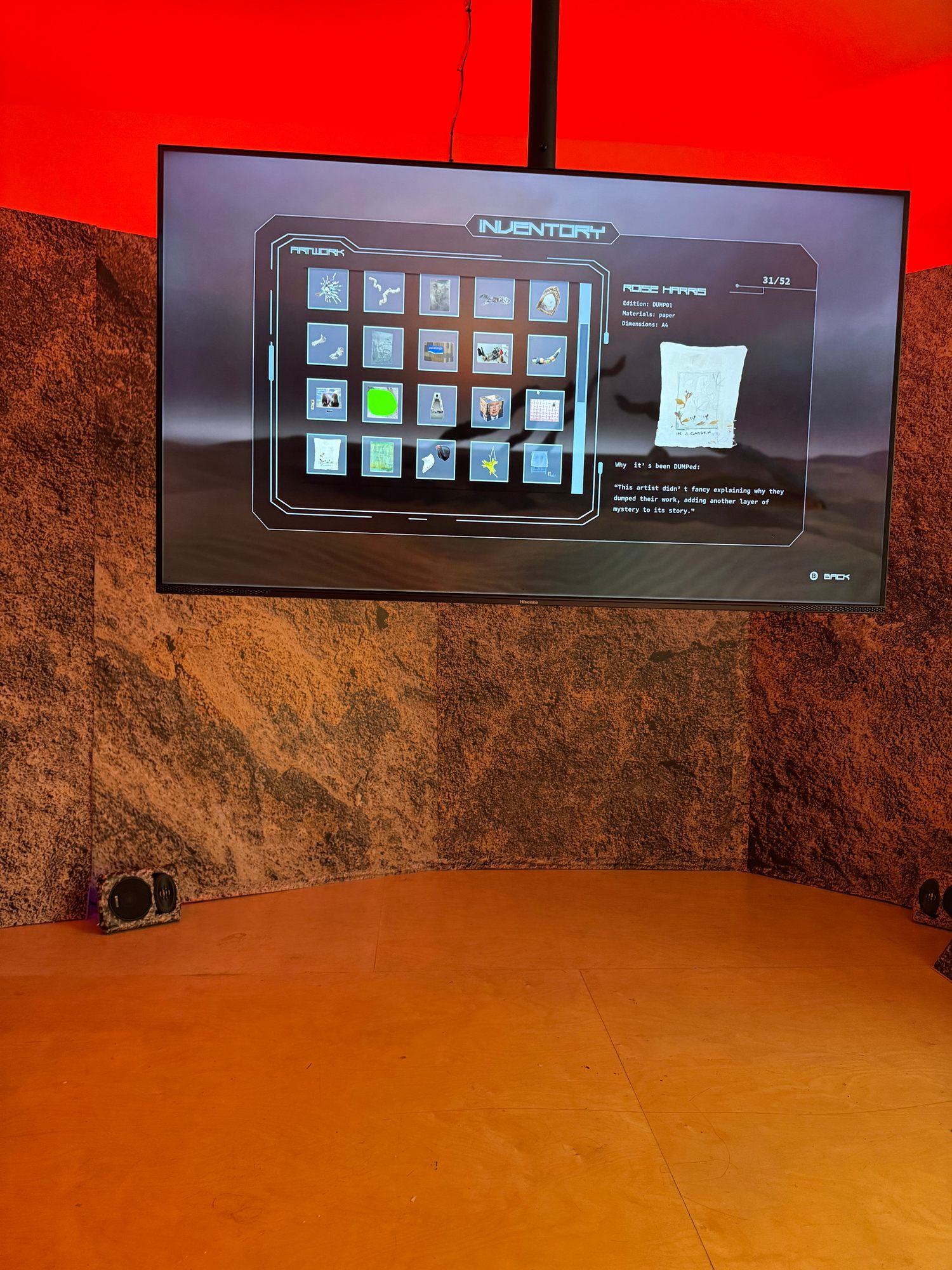
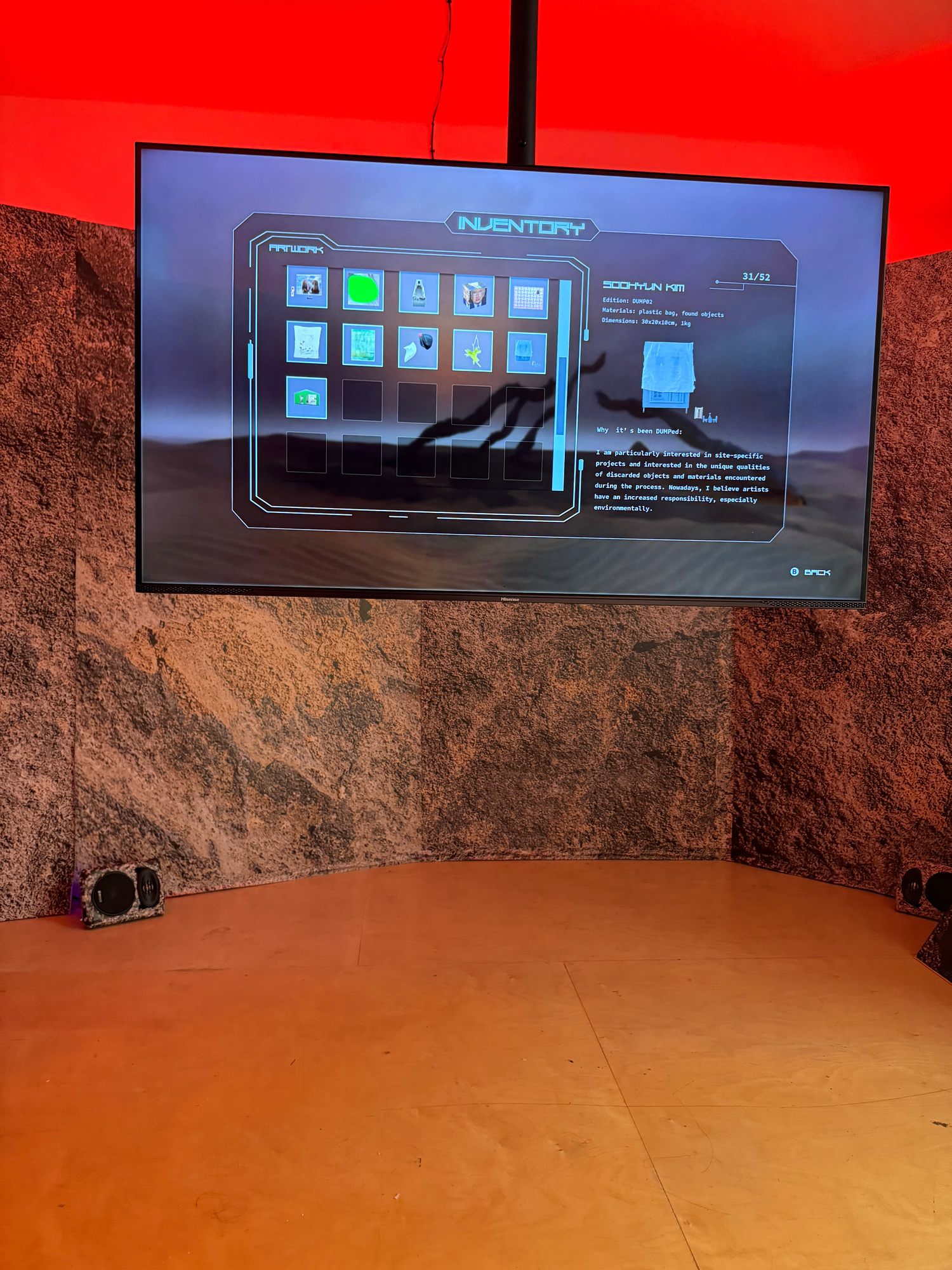
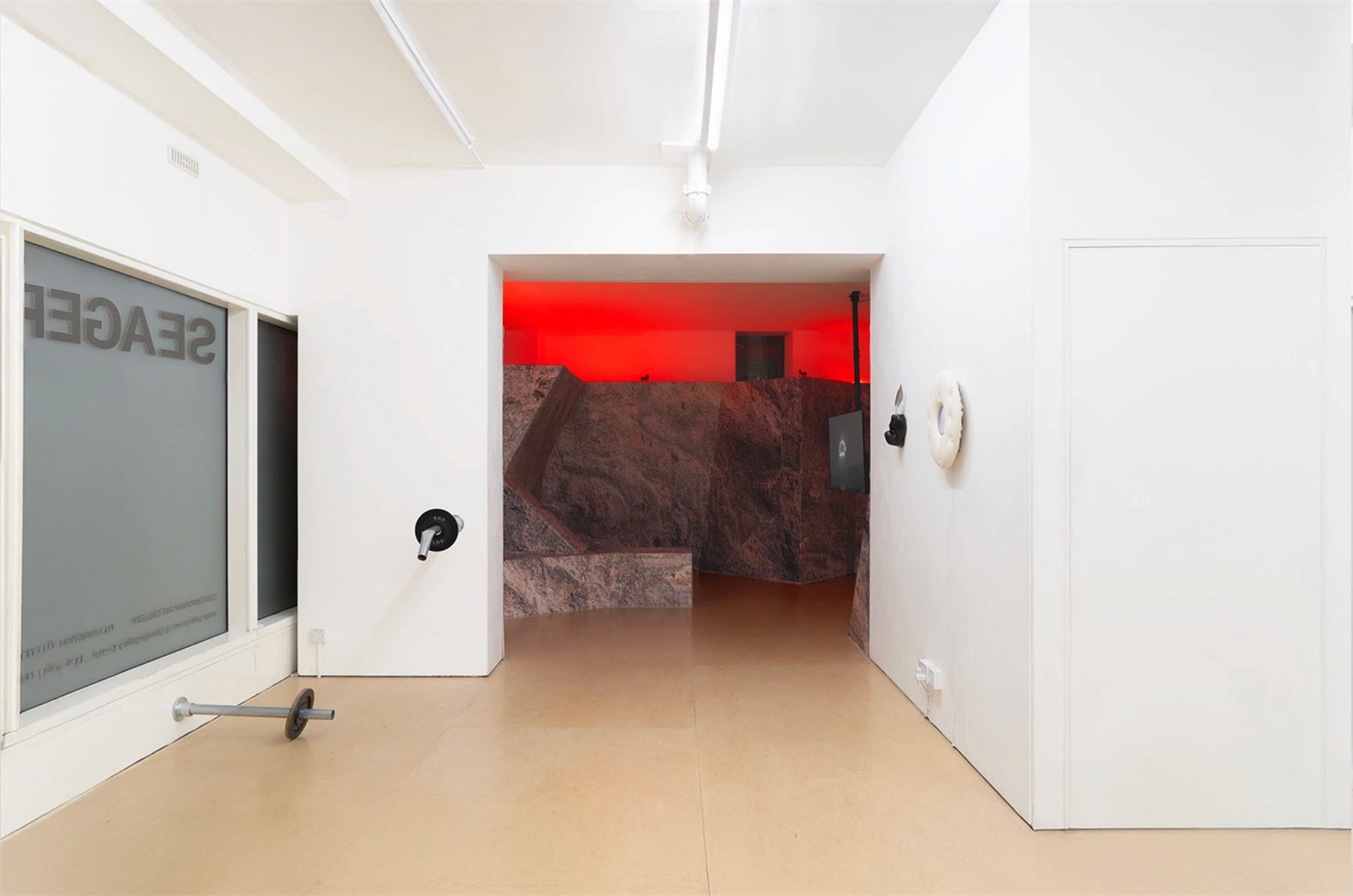
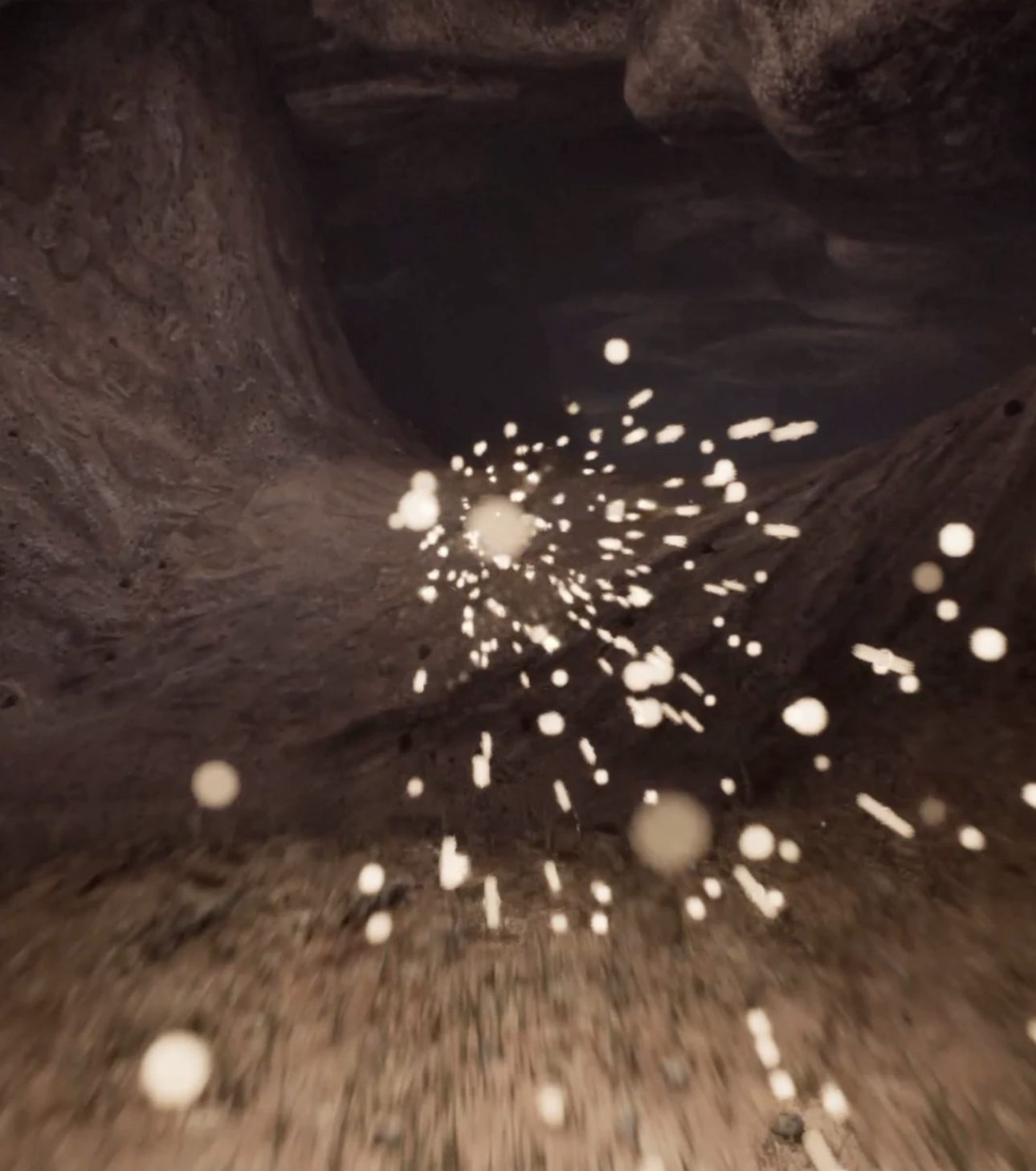
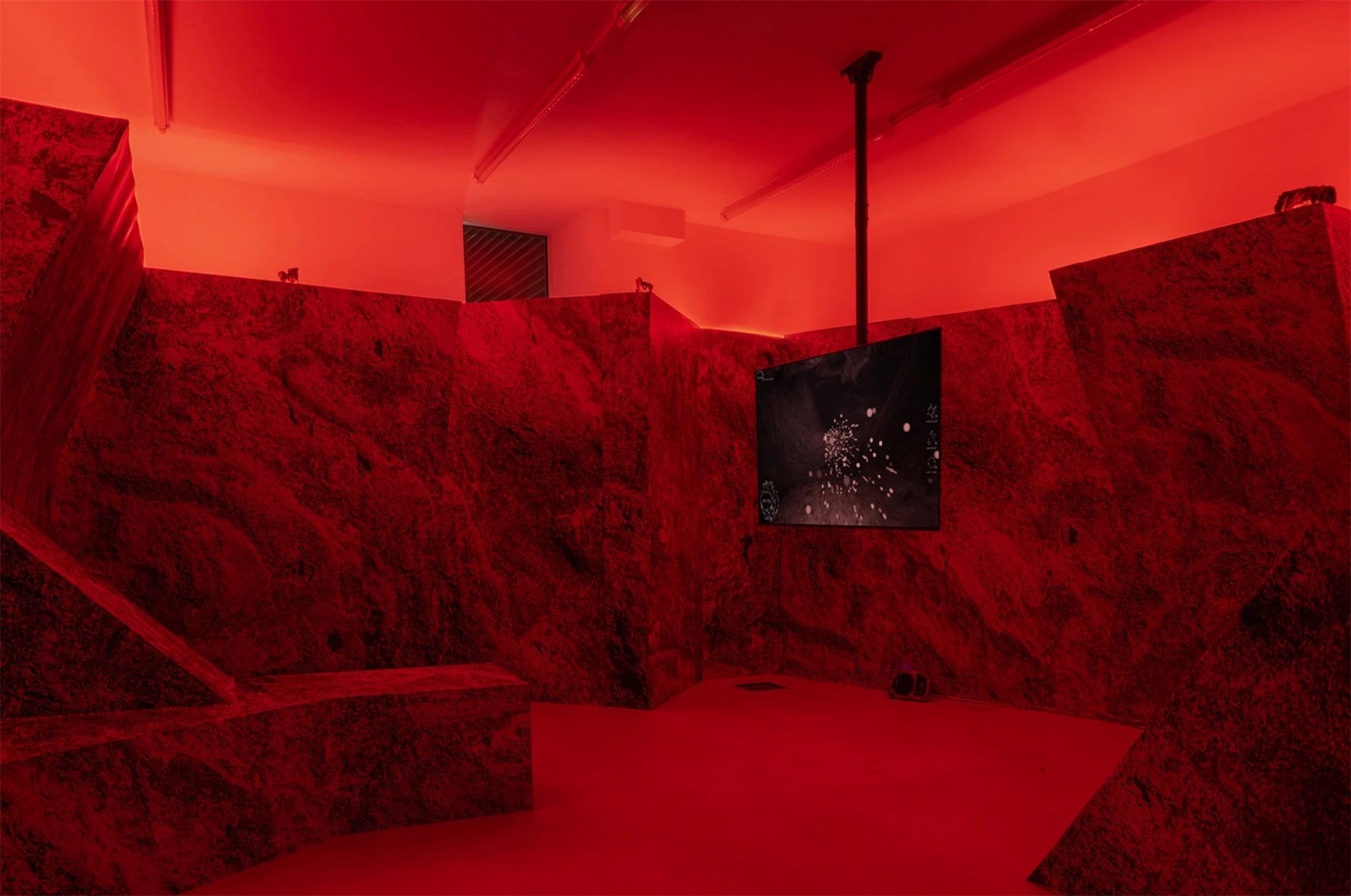
The DUMP Archive is a artist-led initiative I’ve been following for a while, they resist institutional structures by collecting, storing, and redistributing art on its own terms. What stands out in its approach is the commitment to community-built systems and low-tech infrastructures.
The Archive of Forgotten Forms (DUMP Archive 2025), curated by DUMP at Seager Gallery, further explored this idea. Alongside seven artists' works, the exhibition featured DUMP Doom Simulator, a surreal Unreal Engine game that utilises 46 digitised “abandoned” artworks. The display invites users to navigate ruins and recover vanished objects of artworks in a simulated post-apocalyptic landscape, disrupting traditional archival authority and hinting at the fragility and mutability of cultural memory. Along with custom-printed vinyls attached to the surroundings of the installation, it's an experience that visitors engage with and are involved in, rather than simply being presented with.
This felt directly relevant to my project. In my NAC space,the home stories web space, personal archives such as interviews, 3D objects, pictures and videos are scattered across a digital terrain. Like the DUMP simulator, my work asks the viewer to navigate fragmented memory, rather than view it linearly. I was especially drawn to the game’s blend of decay, and archival tension, which speaks to how digital preservation is less about control and more about participation and reactivation. The show reminded me that archives can be speculative, open-ended, and playful, yet still deeply personal and political, which is something I carry forward into how I gather and recontextualise other people’s stories of home.
12-12-2024
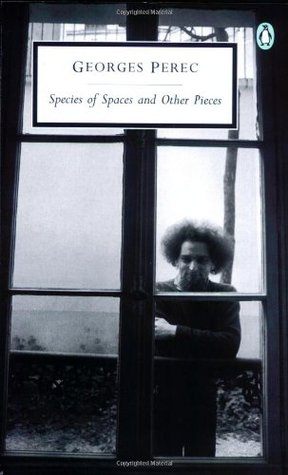
From investigating digital and physical spaces in my dissertation, Georges Perec’s Species of Spaces has resonated with me and influenced my thinking in the current project on “home.” His inventory of the everyday does not romanticise domesticity but insists on its strange significance. When he writes about rooms, beds, doors, or walls, he dissects them gently. His tone is analytical yet warm, as if he is both cataloguing and grieving for things that are disappearing as he observes them.
Perec begins with the page, and slowly scales outward: bedroom, flat, building, street, city. This expanding radius of intimacy influenced how I thought about mapping “home” in my work. Perec planted the seed that home is not singular. It’s scattered, layered, and structured around habits and fragments.
The chapter The Bedroom struck me in particular. Perec names the acts we perform in spaces as a way of defining them, and sleeping, crying, and remembering. He collapses the myth of the neutral space. A bed is not just furniture, but rather a space layered with rituals, often solitary yet universal. He writes with care about the ordinary: what’s under the bed, or how we leave a room. That tone has stayed with me, especially as I began collecting interviews. I wasn’t looking for grand memories, but rather the ordinary ones, the small moments and fragments of memory from people’s livid experiences. Reading Species of Spaces early on gave me a language for the quiet textures of space and the idea that intimacy can be traced spatially, not just emotionally.
Some keywords to note from this reading: scale, rhythm, and interiority.
29-07-2024
I’m looking for my home, but let me gather other people’s home first.
Referenced external texts and exhibitions
Adelman, D., Brock, A. J., Dial, A. J., Dinkins, S., Fouché, R., He, H., Nagy, J., Nakamura, L., Steele, C. K., Walcott, R., Williams, J., Winstead, K. C. and Zeitlin-Wu, L. (2025) ‘The longing for home: nostalgia for digital platforms’, in Technoskepticism: Between Possibility and Refusal. Stanford, CA: Stanford University Press, pp. 102–123.
Dickinson, E. (1896) Poems. Boston: Roberts Brothers. (Poem quoted: I years had been from home.)
Perec, G. (1997) Species of Spaces and Other Pieces. Translated by J. Sturrock. London: Penguin.
Arebyte Gallery (2020) RGBFAQ [online exhibition note]. Available at: https://www.arebyte.com/alan-warburton-rgbfaq (Accessed: 9 June 2025).
DUMP Archive (2024) Archive of Forgotten Forms / DUMP Doom Simulator [past event]. Available at: https://www.hellodump.com/pastevents/DUMP-Doom-Simulator (Accessed: 9 June 2025).
delfinafdn (2025) Caroline Sinders × Romy Gad el Rab – residency introduction [Instagram post, 28 March 2025]. Available at: https://www.instagram.com/p/DHwBhlGNvtJ/?img_index=1 (Accessed: 9 June 2025).
| Wu, Y. (n.d.) ‘Soap Tiles’ in Portfolio [online]. Available at: https://www.yijiawu.art/portfolio?pgid=lz6y7tt2-44de75e0-7fa8-416b-a792-f14592494f86 (Accessed: 9 June 2025). |
Hypebeast (2025) Do Ho Suh Announces “Walk the House” at Tate Modern [news article]. Available at: https://hypebeast.com/2025/2/do-ho-suh-walk-the-house-tate-modern-genesis-exhibition-london-announcement (Accessed: 9 June 2025).
Kaur, J. (n.d.) Artist stories – Jasleen Kaur [Tate Learning resource]. Available at: https://www.tate.org.uk/schools/resources/artist-stories-jasleen-kaur (Accessed: 9 June 2025).
Kaur, J. (2023) Alter Altar. Tramway, Glasgow. Available at: https://jasleenkaur.co.uk/alter-altar/ (Accessed: 9 June 2025).
Norfolk, R. (2018) Playground [studio documentation]. Available at: http://www.rupertnorfolkstudio.com/playground-2/ (Accessed: 9 June 2025).
Royal College of Art (2023) Yijia Wu graduate portfolio [online]. Available at: https://2023.rca.ac.uk/students/yijia-wu/ (Accessed: 9 June 2025).
Sarabande Foundation (2025) Homesick [press release via ShowStudio]. Available at: https://www.showstudio.com/news/sarabandes-latest-exhibition-channels-the-feeling-of-homesickness-through-art (Accessed: 9 June 2025).
Suh, D. H. (2025) ‘Home sweet home’, Tate Etc., 65, Spring. Available at: https://www.tate.org.uk/tate-etc/issue-65-spring-2025/home-sweet-home (Accessed: 9 June 2025).
Warburton, A. (2020) RGBFAQ [artist site]. Available at: https://alanwarburton.co.uk/rgbfaq (Accessed: 9 June 2025).
a-n The Artists Information Company (2017) ‘Rupert Norfolk wins FIRST@108 Public Art Award’. Available at: https://www.a-n.co.uk/news/rupert-norfolk-wins-first108-public-art-award (Accessed: 9 June 2025).
ShowStudio (2025) ‘Sarabande’s latest exhibition channels the feeling of homesickness through art’. Available at: https://www.showstudio.com/news/sarabandes-latest-exhibition-channels-the-feeling-of-homesickness-through-art (Accessed: 9 June 2025).
Tate (n.d.) ‘Tracey Emin – My Bed’. Available at: https://www.tate.org.uk/art/artworks/emin-my-bed-l03662 (Accessed: 9 June 2025).
Tate Modern (2025) The Genesis Exhibition: Do Ho Suh [online]. Available at: https://www.tate.org.uk/whats-on/tate-modern/the-genesis-exhibition-do-ho-suh (Accessed: 9 June 2025).
Sinders, C. and Gad el Rab, R. (2024) Body-Phone-Complex. Live 1 : 1 performance, A Night of Encounters, Delfina Foundation, London, 11 March 2024.
Hypebeast (2025) Installation view of “Walk the House”, Tate Modern [photograph]. In: ‘Do Ho Suh Announces “Walk the House”…’. Available at: https://hypebeast.com/2025/2/do-ho-suh-walk-the-house-tate-modern-genesis-exhibition-london-announcement (Accessed: 9 June 2025).
Edinburgh Art Festival (2023) Do Ho Suh, Tracing Time [press image]. Available at: https://www.edinburghartfestival.com/event/do-ho-suh-tracing-time/ (Accessed: 9 June 2025).